Ask someone why they’re hesitant about a care home for a parent, and the fear underneath the practical objections is usually the same one: that it means isolation. A smaller room. Fewer visitors. A slower, lonelier version of life. It’s a reasonable fear, and it’s also, when a home is doing things properly, largely backwards. Isolation is usually a bigger risk at home alone than it is in a well-run community.
Key takeaways
- Loneliness is a genuine health risk for older adults, linked to cognitive decline and depression, not just an emotional discomfort to push through.
- Social connection is treated as one of seven pillars of quality of life at Nazareth Care, supported by an all-hours visitation policy that actively involves families rather than restricting them.
- Structured activities and genuine community – residents who’ve lived in these homes for years, some celebrating milestone birthdays together, do more to fight isolation than any individual activity on its own.
Why loneliness is a health issue, not just an emotional one
Loneliness in older adults isn’t simply unpleasant; it’s associated with measurable declines in both mental and physical health, including a higher risk of depression and faster cognitive decline. Ageing and depression are more closely linked than most families realise, and isolation is one of the clearest contributing factors. An older person living alone, with reduced mobility and a shrinking circle of friends as peers pass away or move, is at real risk of a kind of isolation that’s much harder to reverse once it sets in.
This is precisely the fear that keeps some families from moving a parent into care at all, the idea that a home means fewer visitors and less connection. Done properly, it should mean the opposite.
How community is built into daily life, not left to chance
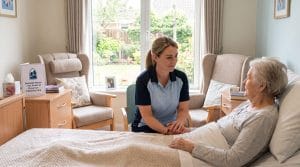
Social connection sits alongside physical health, mental health, personal choice, a comfortable environment, cultural and spiritual needs, and access to care as one of the seven pillars of quality of life that guide how Nazareth Care runs its communities. In practice, that includes an all-hours visitation policy and actively involving families in daily life, rather than confining visits to restricted hours- a small operational detail that has an outsized effect on how connected residents actually feel.
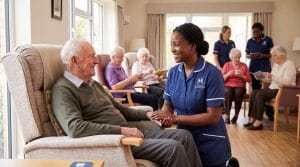
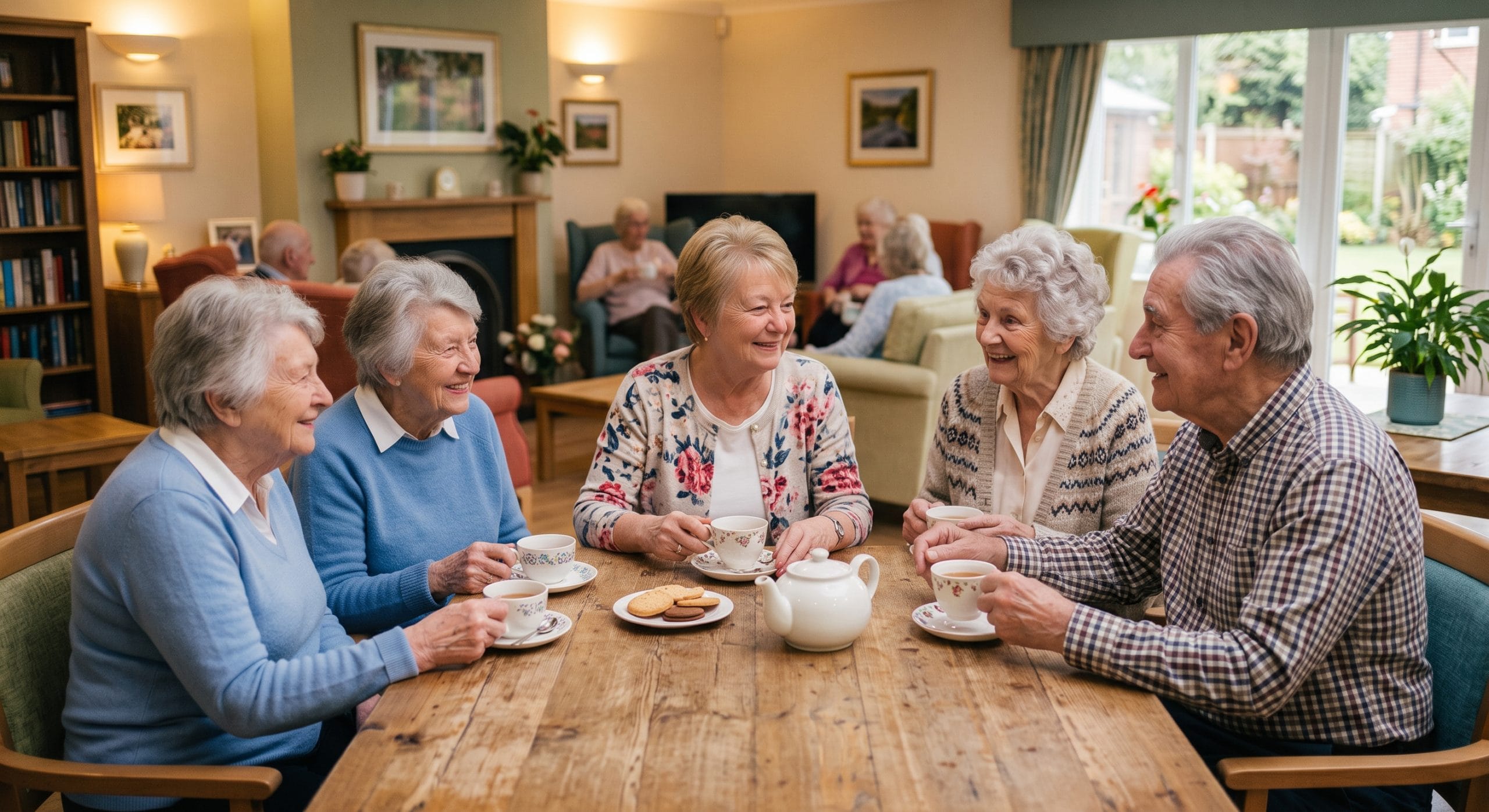
Structured activity also matters here. Outings, regular exercise sessions, and even animal-assisted activities all serve a dual purpose: they’re good for physical and mental health individually, and they give residents a shared reason to gather, talk, and look forward to something together, which is where real community tends to form, more than in any single scheduled event.
What genuine community actually looks like
The clearest evidence of community isn’t a brochure claim; it’s residents who’ve built real lives and relationships within a home over years. At Nazareth House Pretoria, residents have celebrated turning 101 among the community they’d come to call home, and it’s worth getting to know some of the residents there to see what that looks like day to day. Elsewhere, one resident marked her 104th birthday surrounded by the people she’d shared years of daily life with.
These aren’t isolated PR moments; they’re what long-term community looks like when it’s working: residents who’ve been part of a home for years, celebrated by staff and fellow residents who genuinely know them.
Community that extends beyond the residents themselves
Community isn’t limited to the relationships between residents and staff. Through Friends of Nazareth, Nazareth Care runs an active volunteer programme alongside corporate partnerships and community outreach, supporting an organisation of more than 600 staff caring for residents across its Southern African communities. Volunteers regularly spend time directly with residents, an extra layer of social contact beyond family and staff that many residents genuinely look forward to.
This matters for the loneliness question specifically: a home with an active, visible volunteer culture tends to have more going on socially, day to day, than one relying purely on its own staff and residents’ existing families. If you’re the kind of family that might want to stay involved even before your relative moves in, or after, volunteering is worth exploring in its own right.
What families should look for
If you’re evaluating a home partly on this basis, a few practical questions are worth asking directly:
- Are visiting hours flexible, or tightly restricted? Restrictive visiting policies are one of the clearest signs a home isn’t prioritising family involvement.
- What does a typical week of activities actually look like? Ask for a real schedule, not a general description.
- How long have current staff and residents been there? High turnover on either side makes it harder to build the kind of relationships that genuinely reduce loneliness.
- Can you speak to a resident’s family, not just see a testimonial? A brief conversation tends to tell you more than any single quote.
- Is there a visible volunteer or community outreach programme? An active volunteer culture is a reasonably reliable sign that a home treats social connection as a genuine priority rather than a line item, since it takes ongoing effort to sustain.
Frequently asked questions
Is loneliness really a risk in care homes, or just for people living alone? Either setting carries risk if social connection isn’t actively supported. The difference is that a well-run home can build structured, daily opportunities for connection in a way that’s much harder to replicate for someone living alone.
How does an all-hours visitation policy work in practice? It means families aren’t restricted to narrow visiting windows and can be part of a resident’s daily life rather than scheduled occasional visits, an important distinction for residents who rely on regular family contact for emotional wellbeing.
Can residents keep up hobbies or interests they had before moving in? Personal choice is treated as one of the core pillars of quality of life, so residents are encouraged to continue existing interests alongside the community activities on offer, rather than having to give them up.
See it for yourself
The best way to judge whether a home takes community seriously is to visit and see it in person, talk to residents, watch a mealtime, ask about the activity calendar. Get in touch with Nazareth House to arrange a visit and see what daily life and connection actually look like there.