
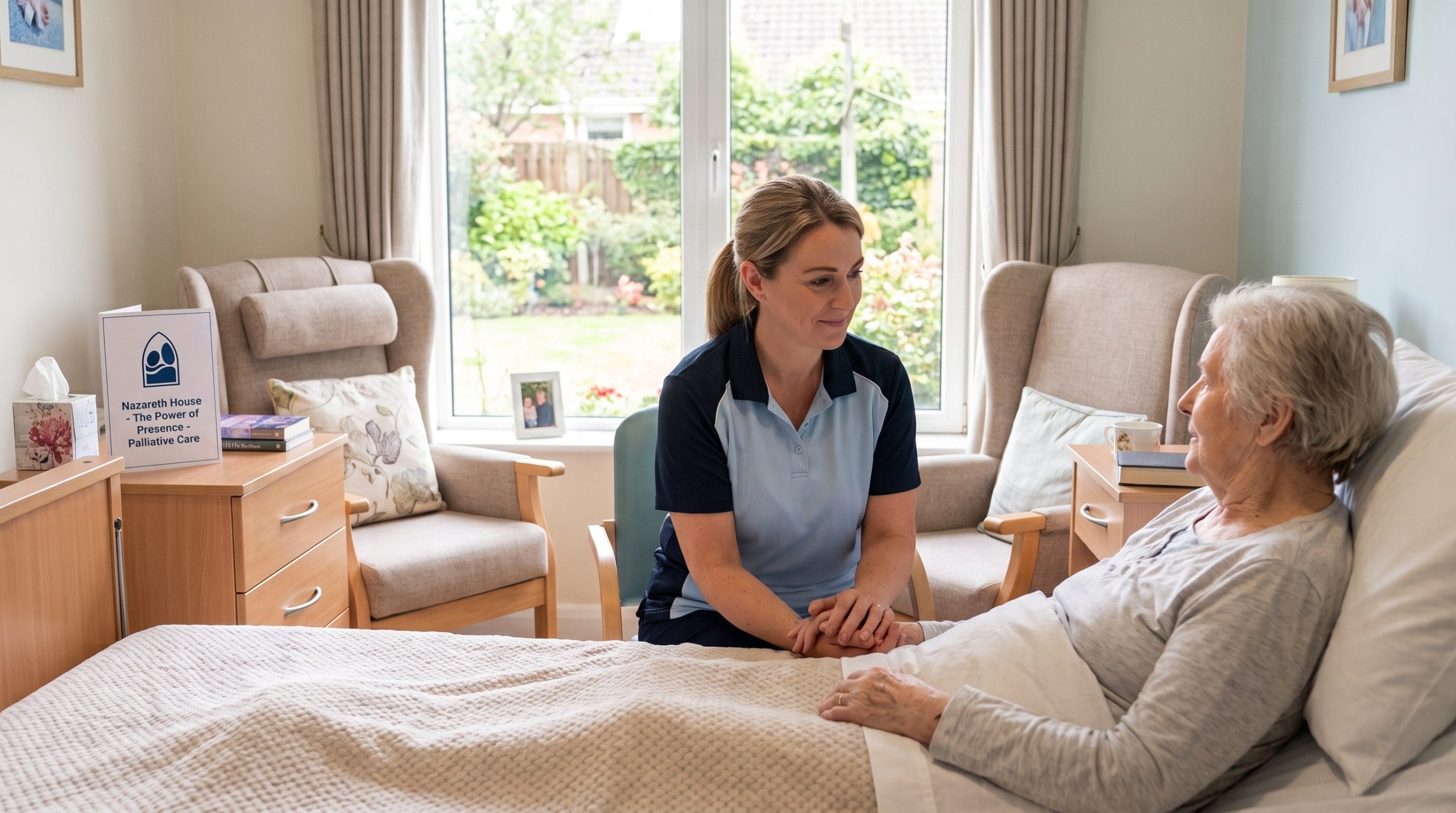
There’s a particular kind of exhaustion that comes with caring for someone through a terminal illness – not just physical, but the constant emotional weight of trying to manage pain, comfort, and your own grief at the same time, often while still needing to function at work or care for other family members. Palliative care exists to carry some of that weight, for the person who’s ill and for the family around them.
This is a difficult subject to search for information on, so we’ve tried to keep this guide straightforward: what palliative care actually is, what it isn’t, and how it’s approached at Nazareth House.
Key takeaways
- Palliative care focuses on comfort and quality of life when an illness can’t be cured; it is not the same as giving up on care, and it doesn’t only apply in a person’s final days.
- At Nazareth House, palliative care is one of three levels within the frail care service, alongside acute and primary care, focused on pain management, emotional support, and dignity.
- Good end-of-life care supports the whole family, not just the resident, through communication, presence, and reducing the practical burden on relatives.
What palliative care actually means
Palliative care is care focused on lessening pain and symptoms for a serious illness that can’t be cured, rather than care aimed at curing it. That distinction matters, because “palliative” is often misunderstood as synonymous with “end-of-life” or “there’s nothing more to do.” Neither is accurate. Palliative care can run alongside other treatment, and its central aim throughout is comfort, dignity, and quality of life, not withdrawal of care.
Within frail care, palliative support sits as one of three levels of nursing care, alongside acute and primary care, adjusted to how much support a resident needs at any given point. As an illness progresses and a resident’s needs shift toward comfort rather than active treatment, care shifts with it; the goal throughout is providing comfort and dignity during the final stages of life, with a focus on pain management, emotional support, and maintaining quality of life for as long as possible.
What good palliative care looks like day to day
A few things distinguish genuinely good palliative care from care that’s merely adequate:
- Proactive pain management, not just reactive response to a resident reporting discomfort.
- Emotional and spiritual support, recognising that the end of life raises questions far beyond the physical.
- Consistency of carers, so a dying person is looked after by people who know them, not a rotating set of unfamiliar staff.
- Family inclusion, with clear, honest communication about what to expect rather than clinical distance.
- A calm, dignified environment, free of the harsher edges of a purely medical setting.
This is where the broader philosophy behind a care home matters as much as its clinical competence. Nazareth Care frames this across all its levels of care through what it calls the seven pillars of quality of life: social connection, physical health, mental health, personal choice, a comfortable living environment, cultural and spiritual needs, and access to care. In palliative care specifically, personal choice, spiritual needs, and comfort tend to move to the foreground.
Supporting the family, not just the resident
Palliative and end-of-life care is rarely only about the person who is ill. Families navigating this stage are often managing grief, guilt, logistics, and difficult conversations with siblings or other relatives all at once, on top of the practical question of cost, which is worth understanding early. Planning for the costs and value of professional aged care is a useful starting point if your family hasn’t yet had that conversation, since clarity here tends to reduce friction later, at a time when friction is the last thing anyone needs.
Regular, honest communication from the care team is one of the most consistently underrated parts of this process. Families who are kept properly informed about what’s changing, what to expect, and what decisions may need to be made generally cope better with an inherently difficult period than families who feel like they’re being managed rather than included.
Grief doesn’t wait for the end
One of the less-discussed aspects of palliative and end-of-life care is that grief often begins well before death, a process sometimes called anticipatory grief. Families can find themselves mourning a parent’s decline in stages, long before the final days arrive, while also being expected to make clear-headed decisions about care and logistics. Recognising this as a normal, valid response rather than something to push through privately makes a real difference, and it’s part of why emotional support for the family, not just clinical care for the resident, needs to be treated as a core part of good palliative care rather than an afterthought.
Practical honesty from a care team helps too. Families generally cope better when they’re told plainly what to expect next, even when the news is difficult, than when information is softened to the point of being unclear. It allows the time that remains to be spent on what actually matters: presence, conversation, and saying what needs to be said, rather than on confusion about what’s happening medically.
When dementia and palliative care intersect
For residents living with advanced dementia, palliative principles often become relevant well before the very end of life, since the disease itself is progressive and, in its later stages, life-limiting.
Frequently asked questions
Does choosing palliative care mean giving up on treatment? No. Palliative care focuses on managing pain and symptoms and improving quality of life; it can run alongside other medical treatment and doesn’t require a family to stop pursuing care options.
How is palliative care different from frail care generally? Frail care is the broader nursing service covering various levels of need; palliative care is one specific level within it, focused on comfort and symptom management for an illness that can’t be cured.
Can family members stay involved in day-to-day care during this time? Yes, family involvement and clear communication are treated as central to this stage of care, not an afterthought, and visiting policies are structured to support that.
If you need to talk this through
If your family is facing this decision, you don’t need to have all the answers before reaching out. Contact the Nazareth House team to talk through what compassionate palliative care could look like for your loved one, at whatever stage you’re currently at.